 Aug 8, 2026
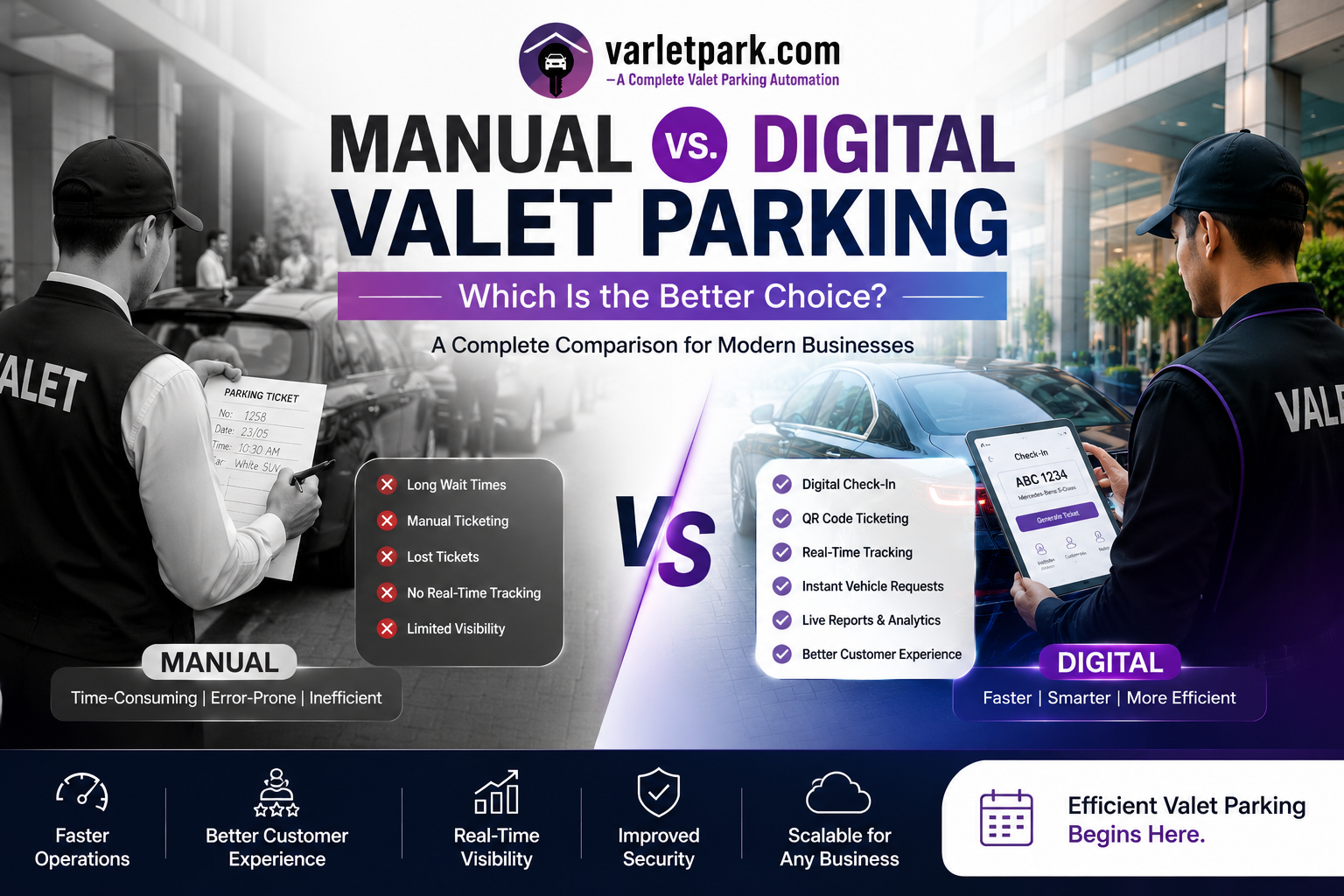
Manual vs. Digital Valet Parking: Which Is the Better Choice?
Introduction
The valet parking experience is often the first interaction customers have with a business. Whether it's a luxury hotel, a busy hospital, or a shopping mall, visitors expect quick service, smooth vehicle handling, and minimal waiting time.
For years, valet operations have relied on paper tickets, handwritten logs, and verbal communication. While these traditional methods may have worked in the past, they often struggle to meet the demands of today's high-volume, customer-focused environments.
With the rise of digital transformation, businesses are replacing manual processes with digital valet parking systems that improve efficiency, enhance customer satisfaction, and provide greater operational visibility.
So, which approach is better? Let's compare manual and digital valet parking to help you make an informed decision.
What Is Manual Valet Parking?
Manual valet parking relies on traditional methods to manage vehicle check-in, parking, and retrieval. Staff typically use paper tickets, handwritten records, and direct communication to coordinate vehicle movements.
While this approach requires minimal technology, it can become difficult to manage as vehicle traffic increases.
Common Challenges of Manual Valet Parking
- Paper tickets can be lost or damaged.
- Vehicle retrieval may take longer during busy periods.
- Managers have limited visibility into daily operations.
- Staff communication depends heavily on phone calls or walkie-talkies.
- Reporting is time-consuming and prone to errors.
What Is a Digital Valet Parking System?
A digital valet parking system replaces manual processes with cloud-based software and mobile applications.
Vehicle details are recorded digitally, tickets are generated electronically, and every stage of the valet journey is tracked in real time. Managers can monitor operations from a centralized dashboard while customers benefit from faster, more organized service.
Manual vs. Digital Valet Parking
FeatureManual Valet ParkingDigital Valet ParkingCheck-InPaper ticketsDigital check-inTicketingHandwritten slipsQR code or digital ticketsVehicle TrackingManual updatesReal-time trackingCustomer RequestsPhone or verbal communicationInstant digital requestsReportingManual reportsAutomated analyticsMulti-Location ManagementDifficultCentralized dashboardData AccuracyHigher risk of errorsAccurate digital recordsScalabilityLimitedEasily scalable
Why Businesses Are Choosing Digital Valet Parking
Faster Vehicle Retrieval
Digital systems help staff locate and retrieve vehicles more quickly, reducing customer waiting times.
Better Customer Experience
A smoother check-in and retrieval process creates a more professional and convenient experience for visitors.
Improved Operational Efficiency
Automation eliminates repetitive manual tasks, allowing valet teams to focus on delivering excellent service.
Real-Time Visibility
Managers can monitor vehicle status, staff performance, and parking operations as they happen.
Better Security
Digital records create a complete history of every vehicle movement, improving accountability and helping resolve customer queries.
Industries That Benefit Most
Hotels
Deliver premium guest experiences with faster check-in and vehicle retrieval.
Hospitals
Reduce waiting times for patients and visitors while improving traffic flow.
Shopping Malls
Handle peak-hour vehicle volumes efficiently and improve customer convenience.
Commercial Buildings
Provide organized valet services for employees, visitors, and clients.
Signs It's Time to Upgrade
Your business may benefit from a digital valet parking system if you experience:
- Long vehicle queues
- Frequent customer complaints about waiting time
- Lost or damaged paper tickets
- Difficulty tracking parked vehicles
- Limited operational visibility
- Challenges managing multiple locations
The Future of Valet Parking
As customer expectations continue to evolve, businesses are adopting smarter technologies to improve service quality and operational efficiency.
Digital valet parking systems support faster workflows, accurate reporting, and better customer experiences, making them an increasingly valuable investment for organizations across multiple industries.
Why Choose Varlet Parking?
Varlet Parking helps businesses modernize valet operations with:
- Digital Vehicle Check-In
- QR Code Ticketing
- Real-Time Vehicle Tracking
- Mobile Applications
- Cloud-Based Management
- Multi-Location Support
- Live Reports & Analytics
Whether you operate a hotel, hospital, shopping mall, or commercial property, Varlet Parking provides the tools you need to deliver a faster, more organized, and customer-focused valet experience.
Conclusion
While manual valet parking has served businesses for many years, today's customer expectations demand faster, smarter, and more efficient solutions.
A digital valet parking system helps reduce delays, improve staff productivity, enhance customer satisfaction, and provide complete visibility into daily operations.
For businesses looking to modernize their valet services and prepare for future growth, adopting a digital solution is a practical step toward more efficient parking management.
Frequently Asked Questions
Is digital valet parking better than manual valet parking?
Yes. Digital valet parking systems improve efficiency, reduce errors, provide real-time tracking, and deliver a better customer experience.
Which businesses benefit most from digital valet parking?
Hotels, hospitals, shopping malls, airports, commercial buildings, residential communities, and event venues can all benefit from digital valet parking software.
Can digital valet parking reduce customer waiting time?
Yes. Automated vehicle tracking and instant retrieval requests help staff return vehicles more quickly.
Is digital valet parking suitable for multiple locations?
Absolutely. Cloud-based systems allow businesses to monitor and manage multiple properties from a single dashboard.