 Oct 12, 2026
Valet Parking: Looks Simple, But Runs Like a Complex Machine
The Hidden Complexity Behind “Just Parking Cars”
When people think of valet parking, they usually imagine a simple process: a guest arrives, hands over the keys, a driver parks the car, and the vehicle is returned when requested.
That’s it. Many believe it is one of the easiest operations to manage — a few drivers, some parking space, and a welcoming counter.
But anyone who has managed a valet operation knows the reality. Valet parking is a complex, dynamic hospitality workflow that changes significantly from one location to another.
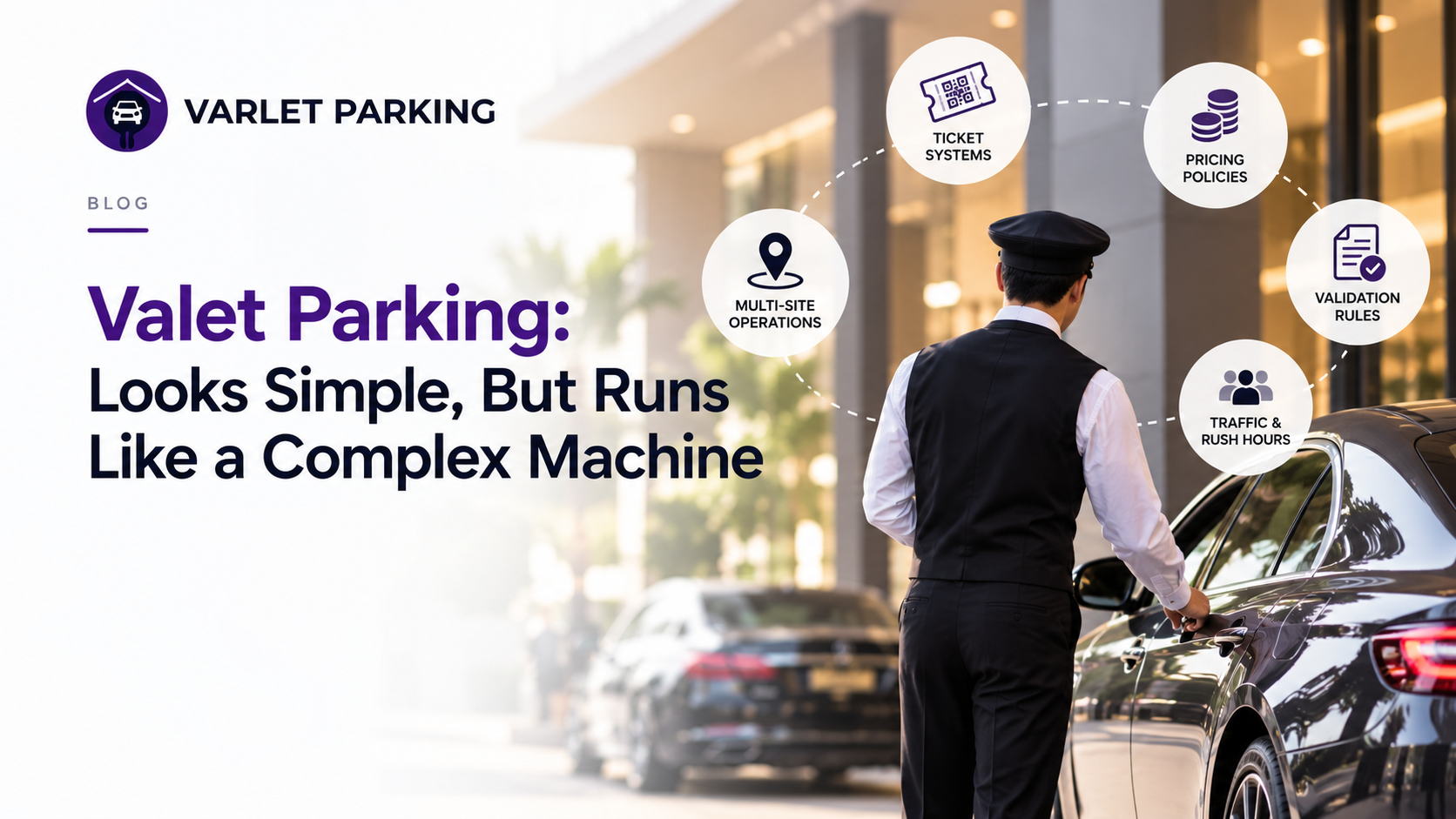
1. Ticket Systems: One Size Never Fits All
Different properties use different ticketing methods:
- Preprinted paper tickets filled out manually
- Reusable laminated or RFID tokens
- System-generated printed tickets
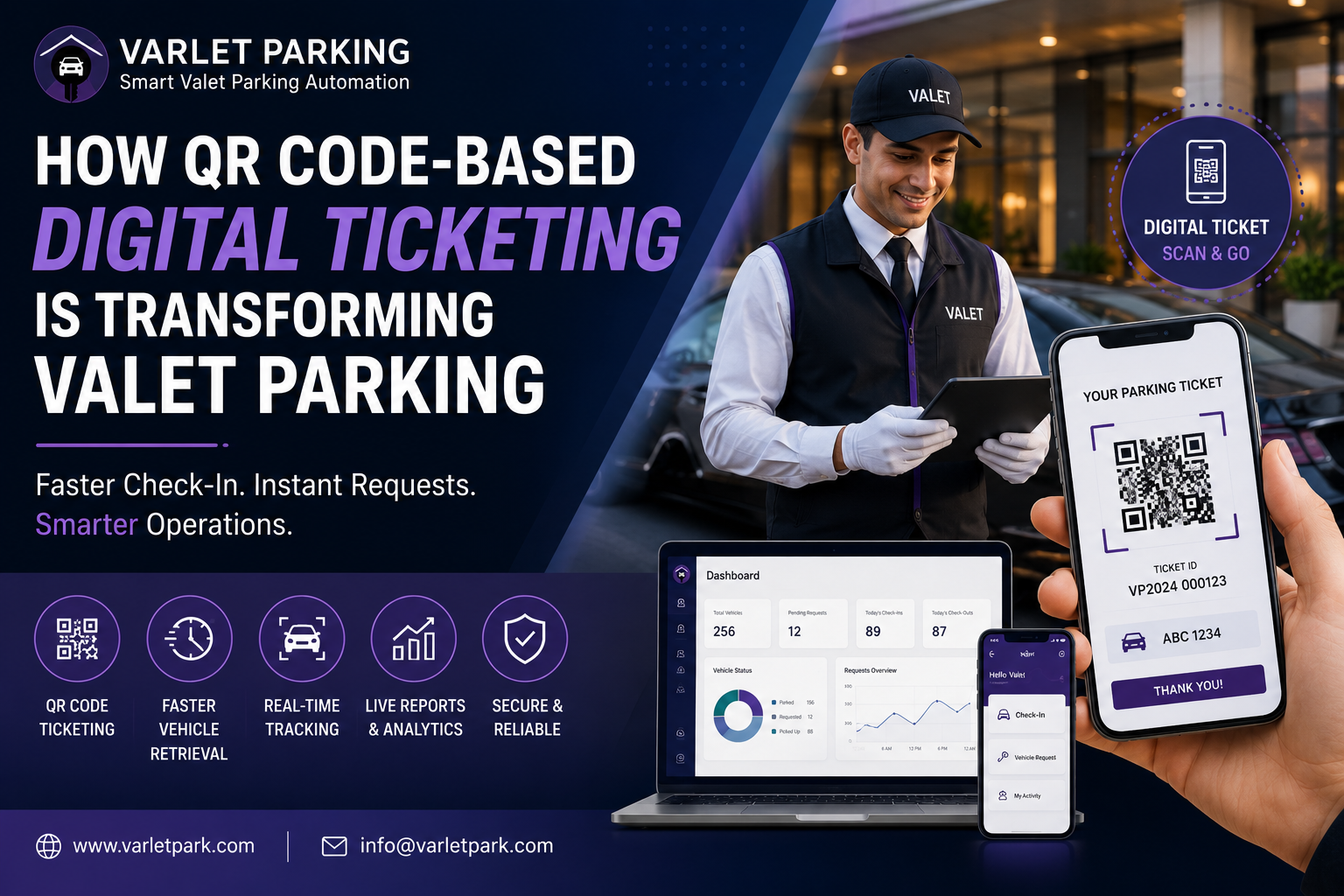
- QR codes and digital e-tickets linked to software
Each method requires its own processes for tracking, validation, reconciliation, and reporting. Managing these variations without a unified platform can lead to confusion, communication gaps, and inaccurate records.
2. Pricing Policies — No Two Locations Are the Same
Valet pricing models vary depending on the property and its business requirements.
Some locations offer complimentary valet parking, while others charge fixed rates, hourly tariffs, or conditional rates such as “First three hours free, then AED 50 per hour.”
Some venues may also apply different rates during weekends, special events, or peak periods.
Without an appropriate digital system, managing these pricing structures manually can increase the risk of calculation errors, customer disputes, and revenue leakage.
3. Validation Rules — Where Complexity Peaks
Hotels, malls, and resorts often have multiple outlets with different parking validation policies.
For example:
- Two hours of complimentary parking with restaurant dining
- Full parking discounts for spa guests
- Different validation rules for external tenants
- Special benefits for premium customers
When multiple outlets operate under different rules, staff must verify conditions, coordinate with departments, and apply the correct validations — often during busy periods.
A centralized validation process can help simplify these workflows and improve accountability.
4. Traffic, Rush Hours, and Human Factors
Valet operations can change dramatically throughout the day.
Morning office traffic differs from evening shopping crowds. Rainy days, festive weekends, weddings, conferences, and concerts can all affect vehicle volumes.
During peak periods, driver allocation, parking space planning, and vehicle retrieval become critical.
Without digital monitoring and coordination, maintaining consistent service becomes more difficult. Even small delays can affect guest satisfaction and the property's reputation.
5. Infrastructure Challenges — Every Site Is Unique
Not every valet operation follows the same layout.
Some properties have a single entrance and exit. Others operate multiple gates across different buildings. High-traffic venues may also use off-site parking facilities located some distance away.
Without effective coordination, drivers may waste time locating vehicles, guests may experience longer waits, and communication gaps can disrupt operations.
This is why valet parking software must accommodate real-world operational requirements rather than force every property into the same workflow.
Why Manual Systems Can’t Keep Up
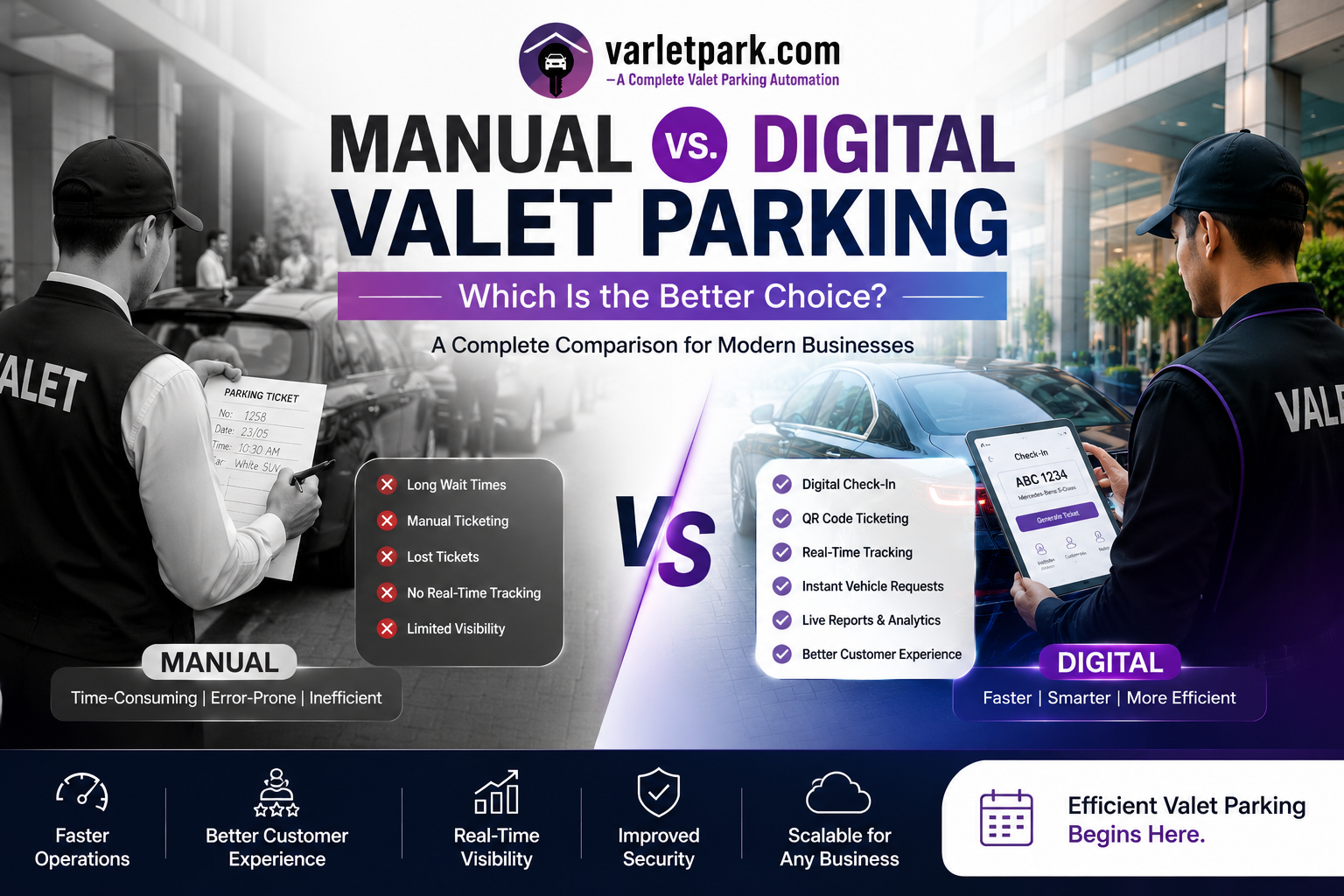
Even experienced teams can struggle without real-time operational visibility.
Common challenges include:
- Lost or duplicate tickets
- Delayed vehicle retrievals
- Inaccurate billing and validation
- Limited accountability
- Lack of performance analytics
Manual processes can make it harder to identify problems, improve efficiency, and maintain consistent service quality.
VarletPark: Simplifying the Complex
This is why VarletPark was developed: to address the practical challenges of valet parking operations through a digital management platform.
Based on the operational needs described in this article, VarletPark aims to help properties manage different workflows without forcing teams to abandon the way their locations operate.
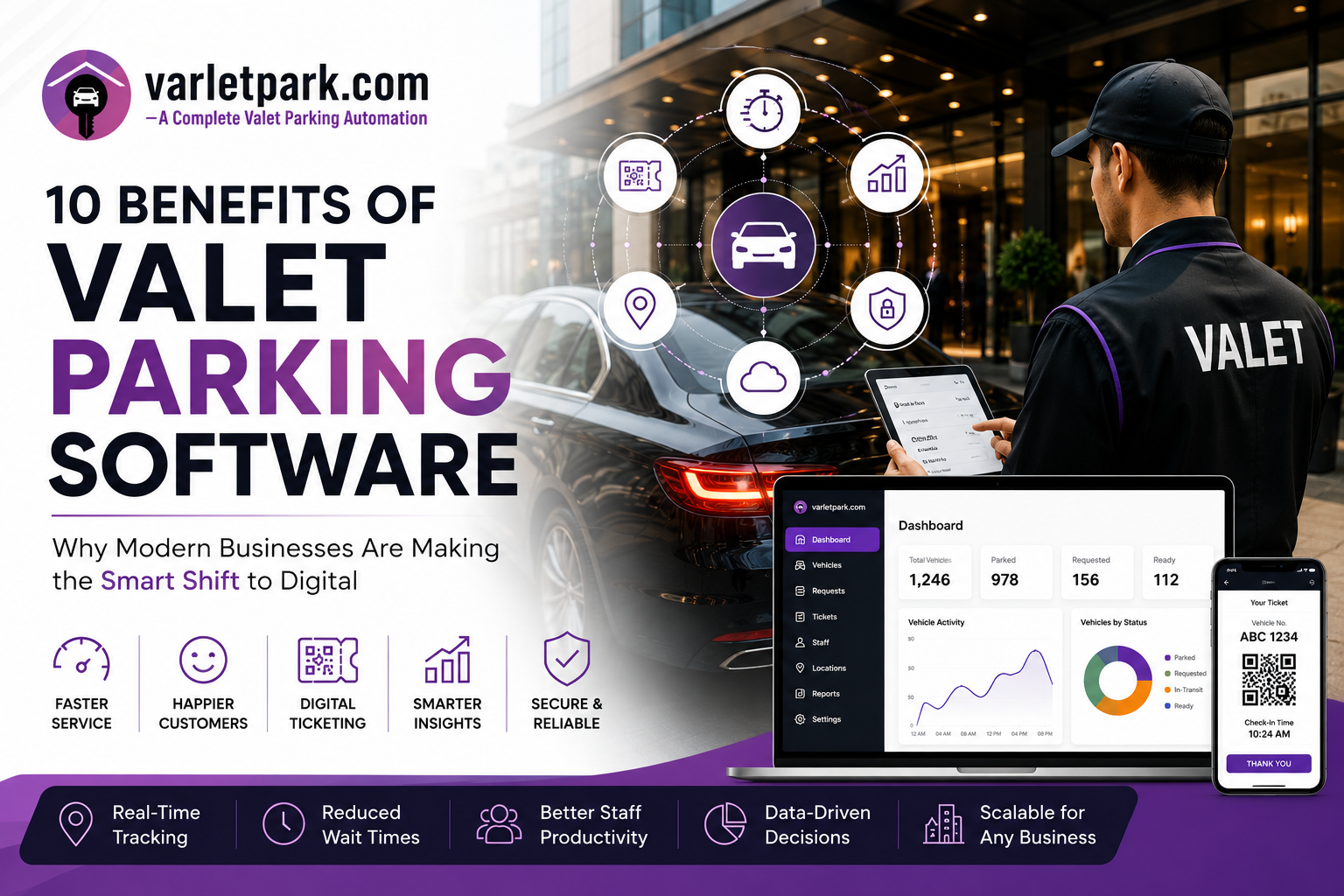
Key capabilities include:
Unified Ticket Management — Manage different ticketing workflows, including paper-based, reusable, printed, and digital tickets, with digital status tracking where supported.
Smart Pricing Management — Configure fixed, hourly, and conditional pricing structures according to operational requirements.
Outlet Validation Management — Organize internal and external outlet validations with clearer records and accountability.
Multi-Entry and Multi-Exit Coordination — Support coordinated workflows across multiple gates and parking areas, depending on configuration.
Driver and Vehicle Tracking — Maintain digital records of vehicles and their movement throughout the valet process.
Performance Reports and Analytics — Gain visibility into operational activity, staff performance, and revenue-related records through available reporting features.
With the right digital platform, properties can reduce dependence on manual coordination, improve operational visibility, and work toward a smoother guest experience.
From Manual Complexity to Smart Mobility
Valet parking may look simple from the outside, but behind every smooth handover is a network of people, processes, pricing rules, vehicles, and decisions.
When these moving parts are connected through technology, operations can become more organized, traceable, and efficient.
At VarletPark, the vision is to transform traditional valet operations into more connected, data-driven mobility experiences — helping businesses deliver hospitality with greater precision and control.
Because the smarter you manage your operations, the better you can serve your guests.
Founder’s Note
This article was originally published by Sreechand Sreekumar, Founder & CEO of Virtual Sys Global Pvt. Ltd., on his LinkedIn profile in October 2025.
It is reproduced here on the Varlet Parking website to share his perspective on the operational complexity of valet parking and the role of technology in simplifying day-to-day management.
Read the original article on LinkedIn →
Valet Parking: Looks Simple, But Runs Like a Complex Machine