 Sep 29, 2026
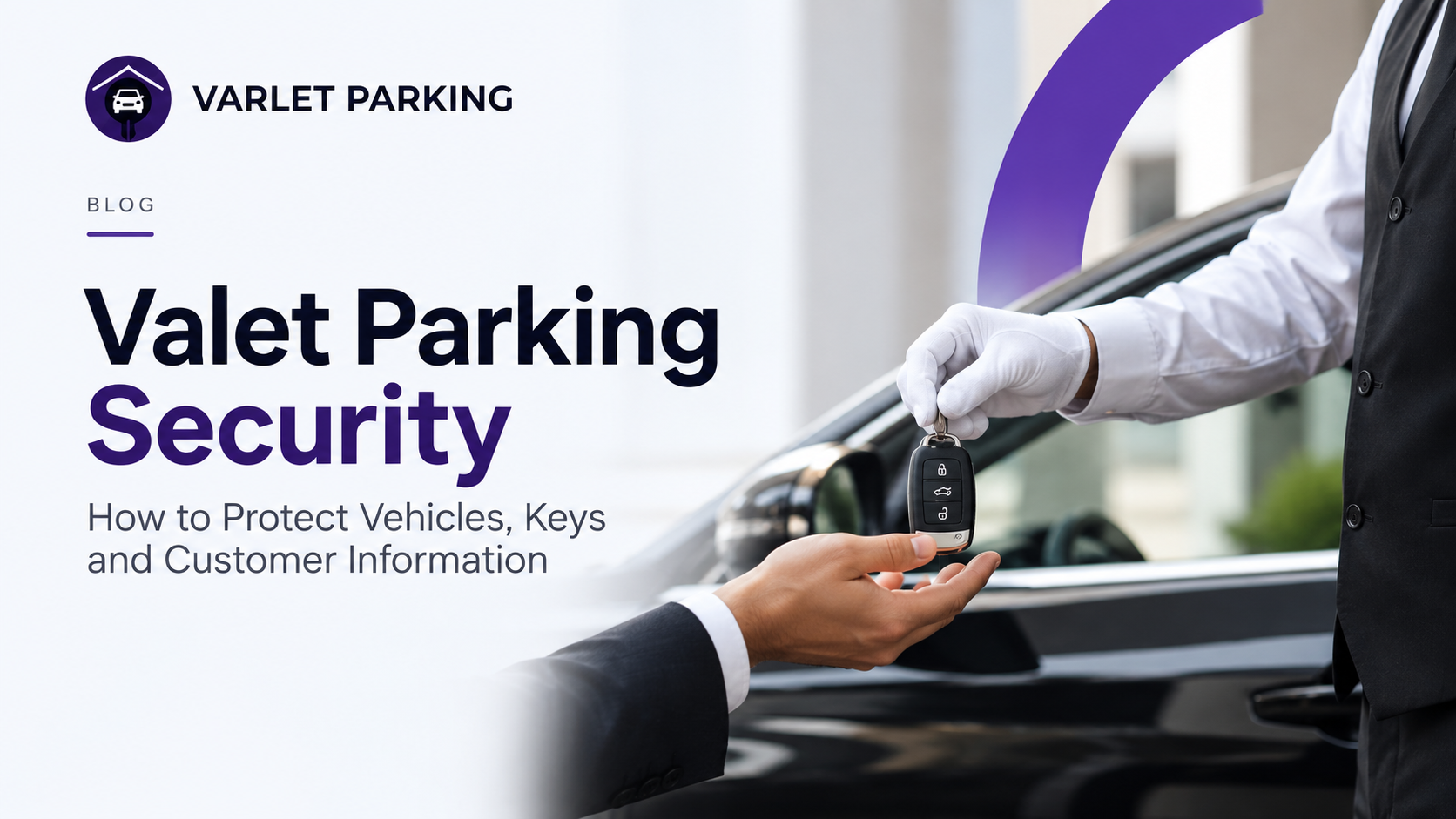
Valet Parking Security: How to Protect Vehicles, Keys, and Customer Information
Introduction
When customers hand over their vehicle keys to a valet attendant, they are placing a significant amount of trust in the business.
They expect their vehicle to be handled responsibly, their personal belongings to remain secure, and their information to be protected throughout the parking process.
For hotels, hospitals, shopping malls, and commercial properties, maintaining that trust is an essential part of providing a professional valet service.
However, managing vehicle security becomes more complicated when multiple attendants handle vehicles, keys are stored in shared areas, and records are maintained using paper tickets or disconnected systems.
This raises an important question: How can businesses improve security and accountability throughout their valet parking operations?
The answer involves more than simply hiring trained staff or installing surveillance cameras. It requires clear procedures, controlled access, accurate records, and technology that helps managers maintain visibility over daily activities.
In this article, we explore the key security challenges in valet parking and the practical steps businesses can take to address them.
1. Why Security Matters in Valet Parking
Valet parking involves several sensitive responsibilities. Staff handle customer vehicles, receive keys, record vehicle information, and coordinate vehicle movements between parking areas and customer pickup points.
A problem at any stage can create inconvenience for customers and operational difficulties for management.
Common security concerns include:
- Lost or misplaced vehicle keys.
- Unauthorized access to vehicles or parking areas.
- Incorrect vehicle handovers.
- Incomplete records of vehicle movements.
- Disputes concerning vehicle condition or belongings.
- Unnecessary exposure of customer information.
These challenges can affect businesses of all sizes, particularly locations that handle a high volume of vehicles.
A structured security process helps establish clear responsibilities, reduces avoidable mistakes, and gives management a reliable way to review incidents when they occur.
2. Secure Vehicle Check-In and Documentation
Vehicle security begins at the entrance.
When a customer hands over a vehicle, the valet team should follow a consistent check-in procedure that records the information needed to identify the vehicle and its parking transaction.
Depending on the business's requirements, this may include:
- Vehicle registration number.
- Vehicle make, model, and colour.
- Check-in date and time.
- Relevant vehicle condition observations.
- Assigned attendant or staff member.
- Unique valet ticket or transaction reference.
Recording relevant vehicle condition details, including photographs where appropriate, can also help establish a reference point if a dispute arises later.
The process should be consistent for every vehicle, rather than depending on individual attendants' habits.
Why it matters: Accurate check-in records help businesses identify vehicles correctly, establish responsibility, and investigate customer concerns more efficiently.
3. Improve Vehicle Key Management
Vehicle keys are among the most sensitive items handled during valet operations.
In a busy property, multiple vehicles may be parked and retrieved simultaneously. If keys are stored without a consistent identification and access procedure, attendants may accidentally select the wrong key or spend time searching for the correct one.
Businesses should establish a dedicated key management process.
Practical measures for better key security
- Use unique identifiers to associate keys with the correct vehicle transaction.
- Store keys in designated, access-controlled areas.
- Limit access to authorized personnel.
- Establish a clear process for receiving and returning keys.
- Maintain records of key transfers when responsibility changes.
Digital systems can support key identification and transaction records, but physical security remains essential.
A secure storage area, clear staff responsibilities, and regular checks should work together with the technology.
4. Control Who Can Access Vehicles and Operational Data
Not every employee needs access to every part of a valet operation.
For example, an attendant responsible for vehicle retrieval may require access to vehicle status and assigned requests, while a supervisor may need additional access to operational reports.
Businesses should define responsibilities and access permissions according to each employee's role.
This principle applies to both physical and digital access.
Physical access control
Parking areas, key storage facilities, and vehicle holding zones should have clearly defined access procedures.
Where appropriate, businesses can use access cards, designated staff areas, surveillance systems, and visitor access controls.
Digital access control
Valet management software should support appropriate account permissions and secure authentication practices.
Businesses should consider:
- Individual staff accounts rather than shared logins.
- Access permissions based on job responsibilities.
- Secure password and authentication procedures.
- Timely removal of access when employees leave.
- Appropriate protection of stored customer information.
These measures help reduce unnecessary access and make it easier to establish accountability.
5. Maintain a Clear Record of Vehicle Movements
Knowing where a vehicle is supposed to be parked is useful. Knowing its recorded status and the sequence of operational activities is even more valuable.
A structured vehicle movement record can help management understand what happened during a valet transaction.
The exact information captured will depend on the system and the property's operating procedures.
These records can help supervisors investigate delays, identify discrepancies, and respond to customer queries.
They should not be treated as a substitute for physical security or staff supervision, but they provide an additional layer of operational accountability.
6. Prevent Incorrect Vehicle Handovers
Returning a vehicle to the wrong person is a serious operational concern.
A reliable handover process should verify that the vehicle and the person collecting it correspond to the appropriate valet transaction.
Businesses can establish procedures that include:
- Confirming the customer's retrieval request.
- Matching the request with the correct vehicle record.
- Verifying the required ticket, reference, or customer details.
- Following additional identity checks when necessary.
- Recording the completed handover.
For high-value vehicles or situations involving lost tickets, staff should follow a documented verification procedure rather than relying on assumptions.
The process should balance security with customer convenience, without making unnecessary personal information accessible to staff.
7. Protect Customer Information and Privacy
Valet operations may collect customer names, contact details, vehicle registration numbers, photographs, and transaction information.
This information should be collected only when necessary for the service and handled responsibly.
Businesses should establish clear rules for collecting, accessing, retaining, and deleting customer data.
Important considerations include:
- Collect only the information required for the service.
- Restrict customer records to authorized personnel.
- Use secure systems to store and transmit information.
- Avoid sharing customer or vehicle details through unsecured channels.
- Establish appropriate data retention and deletion procedures.
Businesses operating in the UAE or other jurisdictions should also consider the data protection requirements applicable to their location and operations.
Protecting customer information is not just a technology responsibility. It also requires staff awareness, clear procedures, and management oversight.
8. Train Staff to Follow Consistent Security Procedures
Even when a business has modern software and physical security measures, its processes depend on the people using them.
New attendants should understand how to receive vehicles, identify keys, record information, and complete vehicle handovers correctly.
Training should cover practical situations, including:
- A customer who has lost their ticket.
- A vehicle with existing damage.
- A discrepancy between a vehicle and its transaction record.
- An unrecognized person requesting a vehicle.
- A missing key or an unexplained vehicle status.
- A suspected security incident.
Supervisors should also conduct periodic reviews to ensure procedures are followed consistently.
A written security policy, supported by regular training, makes expectations clearer for the entire team.
9. How Valet Parking Software Supports Security and Accountability
Manual processes can make it difficult to maintain consistent records when a valet operation handles a large number of vehicles.
A digital valet management platform can help centralize transaction information and provide authorized staff with access to updated operational records.
Depending on the platform's capabilities and configuration, digital valet systems can support:
- Digital vehicle records
Vehicle details and check-in information can be stored against a unique transaction, reducing dependence on handwritten records.
Operational activity records
Recorded check-ins, retrieval requests, and status updates can help management review the sequence of events.
- Staff coordination
A shared operational platform helps authorized team members work with consistent vehicle and transaction information.
- Management visibility
Reports and operational dashboards can help supervisors review activity, identify discrepancies, and improve internal procedures.
It is important to remember that software alone cannot guarantee vehicle security. Its value depends on the features available, how the system is configured, and whether employees follow the appropriate security procedures.
Frequently Asked Questions
1. How can valet parking businesses improve vehicle security?
Businesses can improve vehicle security through consistent check-in procedures, secure key storage, controlled access, vehicle handover verification, staff training, and accurate transaction records.
2. How should valet parking keys be managed?
Keys should be stored in designated secure areas, identified using unique transaction references, and accessible only to authorized staff. Businesses should also establish clear procedures for key transfers and retrieval.
3. Can valet parking software prevent vehicle theft?
Valet parking software can support vehicle identification, transaction records, and operational accountability. However, it cannot independently prevent theft or guarantee vehicle security. Physical safeguards, staff procedures, and appropriate supervision remain essential.
4. Why is digital documentation important in valet operations?
Digital documentation can help businesses maintain consistent vehicle records, review operational activity, and investigate discrepancies or customer concerns more efficiently.
5. How can hotels and shopping malls protect customer information?
They should collect only necessary information, restrict access to authorized staff, use secure systems, establish retention policies, and follow applicable data protection requirements.