 Sep 4, 2026
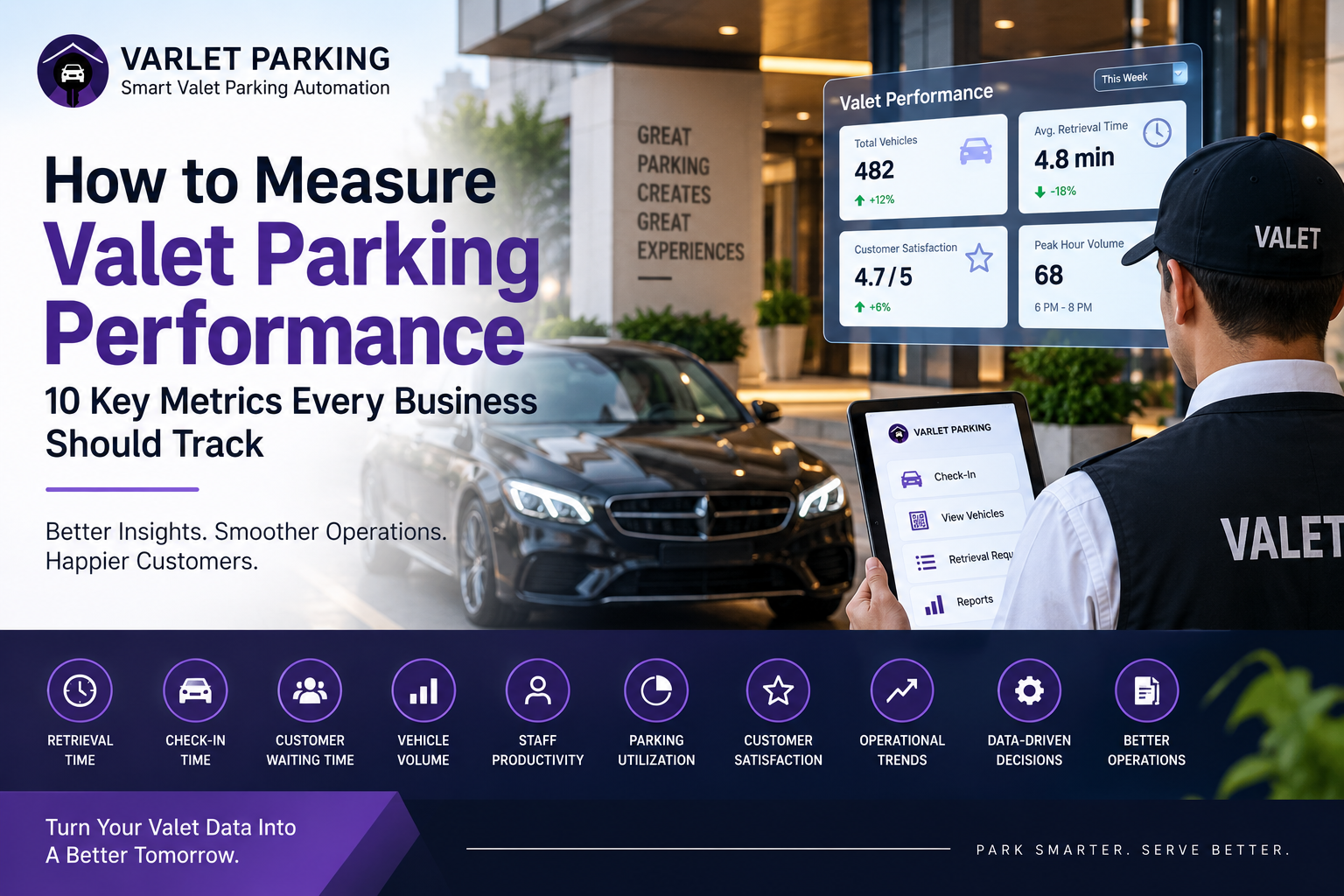
How to Measure Valet Parking Performance: 10 Key Metrics Every Business Should Track
Introduction
A valet parking operation can look busy and successful from the outside, but activity alone doesn't tell you whether the operation is performing well.
How quickly are vehicles being checked in? How long do customers wait for their vehicles? When are the busiest periods? Are valet attendants handling vehicles efficiently? Are delays happening at specific times of the day?
Without the right data, these questions can be difficult to answer.
For hotels, hospitals, shopping malls, commercial properties, and other businesses that offer valet services, measuring operational performance can help identify bottlenecks, improve staffing decisions, and create a better customer experience.
This is where valet parking performance metrics become valuable.
By tracking the right key performance indicators (KPIs), businesses can understand how their valet operation is performing and identify opportunities for improvement.
Why Should Businesses Measure Valet Parking Performance?
Valet parking involves multiple steps, from receiving a vehicle to returning it to the customer. Even a small delay in one part of the process can affect the entire operation.
For example, if vehicle retrieval takes too long during peak hours, customers may experience unnecessary waiting. If management doesn't have access to operational data, it can be difficult to determine why those delays are happening.
Performance data can help businesses:
- Identify operational bottlenecks
- Understand peak periods
- Improve staff allocation
- Reduce customer waiting times
- Monitor service consistency
- Make better operational decisions
- Improve overall customer experience
The goal isn't simply to collect data. The goal is to turn operational data into actionable improvements.
10 Key Valet Parking Metrics to Track
1. Average Vehicle Retrieval Time
One of the most important metrics for any valet operation is average vehicle retrieval time.
This measures the average time between a customer requesting their vehicle and the vehicle being ready for collection.
For example, if customers typically wait several minutes during normal periods but significantly longer during peak hours, management can investigate what is causing the difference.
Tracking this metric over time can help businesses identify:
- Peak-hour delays
- Parking location issues
- Staffing gaps
- Vehicle dispatch bottlenecks
- Process inefficiencies
Reducing unnecessary retrieval time can directly improve the customer experience.
2. Average Check-In Time
The valet experience begins when the customer arrives.
Average check-in time measures how long it takes to register a vehicle and complete the initial valet process.
A lengthy check-in process can create queues, particularly at busy hotel entrances and shopping mall drop-off areas.
Monitoring this metric helps businesses understand whether the check-in workflow is efficient enough to handle their vehicle volume.
3. Average Customer Waiting Time
Retrieval time and customer waiting time may appear similar, but they can provide different insights.
Customer waiting time focuses on how long the customer actually waits before receiving their vehicle.
Tracking this metric can help management understand the experience from the customer's perspective.
If waiting times increase consistently during particular periods, the business can investigate whether additional staff, process changes, or better vehicle organization could help.
4. Vehicles Handled Per Hour
Another useful measurement is the number of vehicles the valet team processes during a specific period.
For example:
Vehicles handled per hour = Total vehicles processed ÷ Number of operating hours
This provides a simple way to understand operational volume.
Comparing vehicle volume across different periods can help businesses identify their busiest times and plan staffing accordingly.
5. Peak-Hour Vehicle Volume
Not every hour of the day places the same demand on a valet team.
Hotels may experience higher volumes around check-in and check-out. Shopping malls may become significantly busier during evenings and weekends. Hospitals can experience different traffic patterns depending on their services and operating hours.
Tracking vehicle volume by time period can reveal:
- Busiest arrival periods
- Busiest retrieval periods
- Seasonal patterns
- Event-related spikes
- Unusual changes in traffic
This information can support more effective resource planning.
6. Retrieval Request Volume
The number of vehicle retrieval requests can provide another useful operational indicator.
A sudden increase in retrieval requests can put additional pressure on valet staff, particularly when several customers request their vehicles at the same time.
By monitoring request volume, managers can better understand when retrieval demand is highest and plan their operations accordingly.
7. Staff Productivity
Valet parking is a people-driven operation, so understanding staff performance is important.
Depending on the system and operating model, businesses may track metrics such as:
- Vehicles processed per attendant
- Retrievals completed
- Average task completion time
- Number of active staff during peak periods
The purpose isn't simply to measure individual employees. It is to understand whether the team has the right resources and workflow to handle the volume efficiently.
8. Vehicle Occupancy and Parking Utilization
For businesses managing a dedicated valet parking area, understanding parking utilization can provide useful operational insights.
Tracking how many vehicles are currently parked compared with available capacity can help management understand how heavily the facility is being used.
This can be particularly important for high-volume locations where parking capacity changes throughout the day.
9. Customer Satisfaction
Operational efficiency is only one part of successful valet management.
A valet operation can process vehicles quickly, but if customers are unhappy with the overall experience, there is still room for improvement.
Businesses can monitor customer feedback through:
- Ratings
- Reviews
- Surveys
- Customer comments
- Complaint trends
Combining customer feedback with operational data can provide a more complete picture of valet performance.
For example, an increase in complaints about waiting times may correspond with a rise in retrieval times during specific periods.
10. Performance Trends Over Time
Looking at individual days can be useful, but long-term trends provide deeper insights.
Businesses can compare performance across:
- Days
- Weeks
- Months
- Seasons
- Events
- Locations
This can reveal whether operational improvements are actually working.
For example, if average retrieval time decreases consistently after a workflow change, management has measurable evidence that the change produced an improvement.
Turning Valet Data Into Action
Collecting metrics is only the first step.
The real value comes from understanding what the numbers mean and deciding what to do next.
Consider this example:
A shopping mall discovers that vehicle retrieval times increase significantly between 6 PM and 9 PM on weekends.
Instead of simply recording the longer waiting times, management can investigate the reason.
Possible causes could include:
- Higher vehicle volume
- Insufficient staff
- Poor vehicle organization
- Increased simultaneous retrieval requests
- Inefficient communication
Once the bottleneck is identified, the business can test a solution and then use the same metrics to measure whether performance improves.
This creates a continuous improvement cycle:
Measure → Identify → Improve → Compare → Optimize
Why Real-Time Data Matters
Traditional valet operations often depend on end-of-day reports or manually maintained records.
While these records can provide some information, they don't necessarily give managers a clear picture of what is happening right now.
Real-time operational data can help managers understand:
- Current vehicle volume
- Active retrieval requests
- Vehicle status
- Peak activity
- Staff workload
- Operational trends
This allows problems to be identified sooner rather than after customers have already experienced delays.
How Technology Makes Performance Measurement Easier
Tracking all these metrics manually can become time-consuming.
A modern valet parking management system can automatically capture information throughout the valet workflow.
For example, when a vehicle is checked in, the system can record the time. When the vehicle is parked, its status can be updated. When a customer requests the vehicle, that activity can be recorded as well.
This creates a digital operational history without requiring staff to maintain separate spreadsheets or handwritten records.
The more accurately the data is captured, the more useful the performance analysis becomes.
Which Metrics Matter Most?
Not every business needs to monitor every possible metric.
The most important KPIs will depend on the property's size, vehicle volume, staffing model, and operational goals.
However, most businesses can start with five core measurements:
1. Average Retrieval Time
Shows how efficiently vehicles are being returned.
2. Customer Waiting Time
Shows the experience from the customer's perspective.
3. Vehicles Handled Per Hour
Shows operational capacity.
4. Peak-Hour Volume
Helps with staffing and resource planning.
5. Customer Satisfaction
Shows whether operational performance translates into a better experience.
Once these metrics are established, businesses can gradually introduce additional measurements based on their needs.
How Varlet Parking Helps Monitor Valet Operations
Varlet Parking is designed to help businesses manage their valet operations through a connected digital platform.
By digitizing key stages of the valet workflow, businesses can create structured operational records that provide greater visibility into their parking activities.
The platform supports capabilities such as:
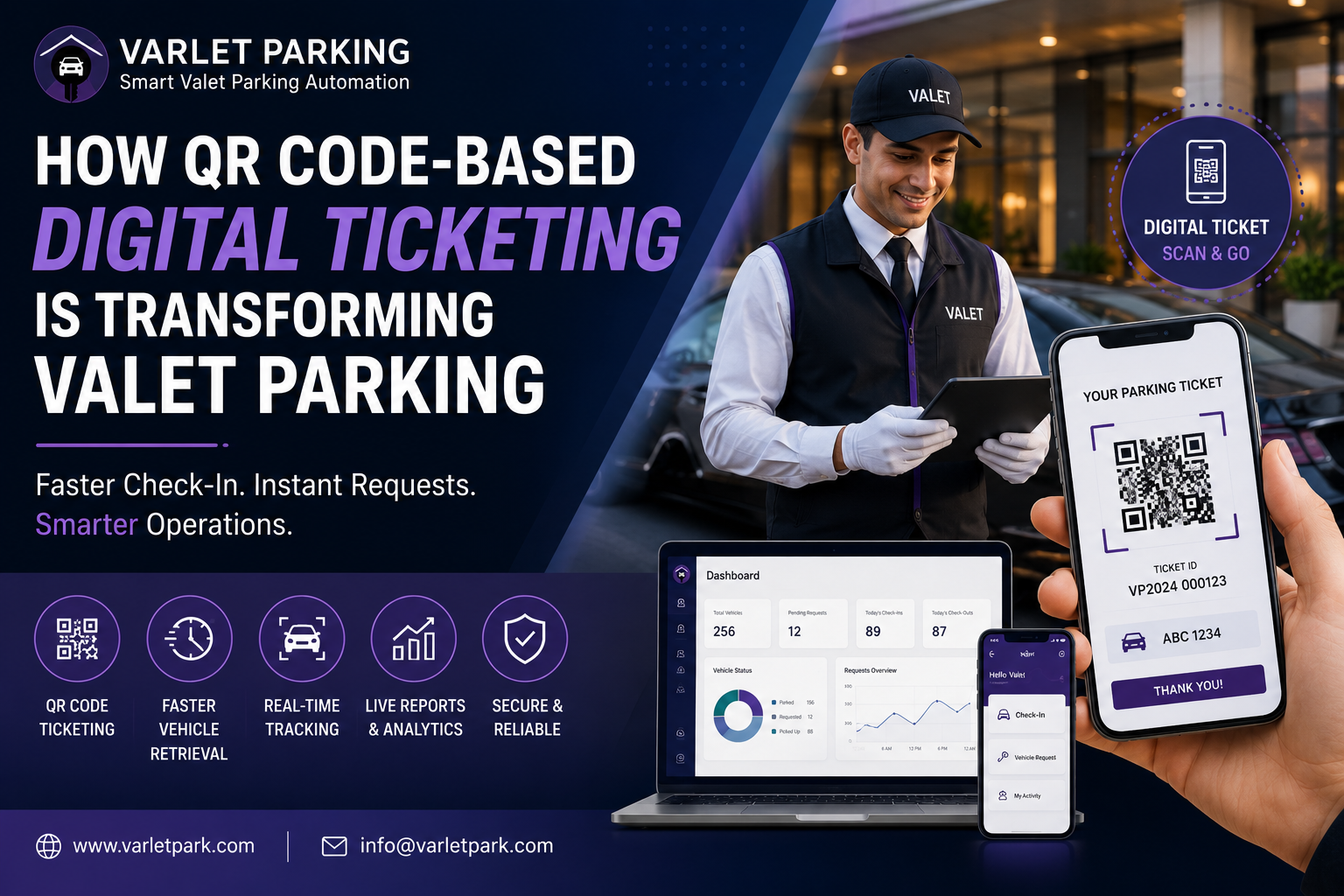
- Digital vehicle check-in
- QR code ticketing
- Vehicle tracking
- Retrieval requests
- Mobile valet operations
- Cloud-based management
- Operational reporting
- Analytics
- Multi-location management
This allows management to move beyond simply knowing how many vehicles were handled and gain a clearer understanding of how the operation is performing.
For hotels, hospitals, shopping malls, and other high-volume properties, this visibility can support better operational planning and continuous improvement.
What Good Valet Performance Looks Like
There isn't one universal number that defines a successful valet operation.
A hotel's requirements may differ from those of a hospital or shopping mall. Vehicle volume, parking layout, staffing, customer expectations, and property size can all influence performance.
Instead of comparing your operation with an arbitrary benchmark, it is often more useful to:
- Establish your current baseline.
- Identify the areas causing the most friction.
- Set realistic improvement goals.
- Make operational changes.
- Measure the results.
- Continue optimizing.
This approach makes performance measurement relevant to your own operation.
Conclusion
A successful valet operation isn't measured simply by the number of vehicles it handles.
Businesses need to understand how efficiently vehicles are processed, how long customers wait, when demand is highest, how staff resources are being used, and how customers perceive the service.
Tracking the right valet parking performance metrics provides the visibility needed to identify problems and make informed operational decisions.
With digital valet management technology, businesses can simplify data collection and gain a clearer picture of their operations.
For hotels, hospitals, shopping malls, and other organizations looking to improve their valet service, measuring performance is the first step toward managing it better.
Frequently Asked Questions
What are the most important valet parking performance metrics?
Average vehicle retrieval time, customer waiting time, check-in time, vehicles handled per hour, peak-hour volume, staff productivity, and customer satisfaction are among the most useful metrics.
How can businesses reduce valet parking waiting times?
Businesses can analyze retrieval times, peak-hour vehicle volumes, staffing levels, and workflow bottlenecks to identify where delays occur and make targeted improvements.
Can valet parking software track performance?
Yes. Digital valet management platforms can record operational activities and provide reports and analytics that help businesses monitor performance.
Why is real-time valet parking data important?
Real-time data provides visibility into current vehicle activity and retrieval requests, helping managers identify operational issues while they are happening.
Should every valet business track the same KPIs?
Not necessarily. The most useful KPIs depend on the property's vehicle volume, layout, staffing, customer expectations, and operational objectives.